

Bear's Den Cannabis Celebrates Seven Years of Community-Centered Service on Kanesatake Mohawk Territory
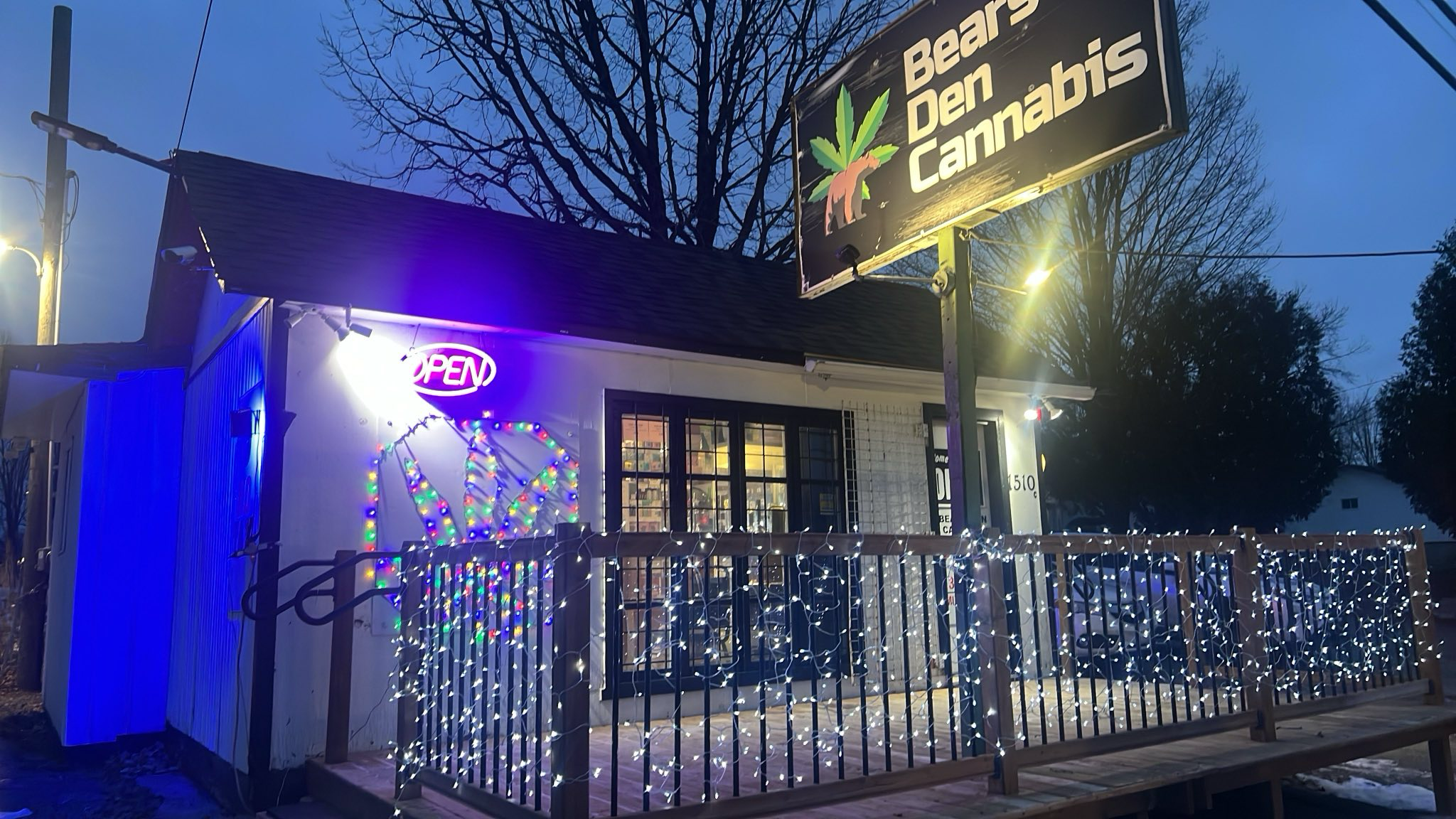

Indigenous-Owned Cannabis Retailer Continues Commitment to Quality Products, Customer Education, and asserting Sovereignty in Kanesatake Mohawk Territory.
KANESATAKE, QC, CANADA, January 18, 2026 /EINPresswire.com/ -- Bear's Den Cannabis, an Indigenous-women owned and operated business located in Kanesatake Mohawk Territory, celebrates seven years of continuous operation in 2025. The Kanesatake Dispensary, situated at 1510C Rang Ste-Philomène approximately six kilometers west of Oka, has been serving adult consumers across the greater Montreal region since 2018.The Oka Dispensary milestone reflects broader conversations about Indigenous economic self-determination that have been unfolding since Canada's federal cannabis legalization in October 2018. Bear's Den operates under Indigenous sovereignty principles on Mohawk lands, representing one approach among several that First Nations communities have taken in response to the Cannabis Act.
Looking ahead, the ownership is exploring a potential new building project that may begin in 2027. No firm commitments or detailed timelines have been established yet, but the consideration of facility improvements signals ongoing investment in the Kanesatake community.
Indigenous Economic Context
Bear's Den represents Indigenous-women entrepreneurship within a sector that's seen varied participation from First Nations communities across Canada. As an Indigenous-women owned company, the business asserts economic sovereignty while contributing to broader conversations about Indigenous participation in Canada's evolving economy.
Indigenous participation in Canada's cannabis sector has taken various forms since legalization. Some First Nations have entered formal agreements with provincial governments to operate licensed retail within established frameworks. Others have pursued independent operations based on Indigenous jurisdiction and treaty rights predating confederation.
A 2023 Senate committee report titled "On the Outside Looking In" examined these dynamics, finding that many Indigenous communities haven't fully shared in economic opportunities arising from legalization. The report recommended amendments recognizing First Nations' rights to govern cannabis on their territories and called for improved consultation with Indigenous communities on cannabis policy.
For many Indigenous entrepreneurs, cannabis represents an opportunity to build local economic capacity and create employment within their own territories. This happens against a historical backdrop of economic exclusion and ongoing efforts to increase Indigenous participation across Canada's economy.
The Kanesatake Mohawk Community
Bear's Den Cannabis is situated within Kanesatake Mohawk Territory, one of three Mohawk communities in Quebec alongside Kahnawake and Akwesasne. The Mohawk, who call themselves Kanien'kehá:ka meaning "People of the Flint," are one of six nations in the Haudenosaunee Confederacy—recognized as the oldest living democratic system in North America.
Approximately 1,500 Mohawk citizens reside in Kanesatake, located on the north shore of Lac des Deux Montagnes. The name Kanehsatà:ke translates to "sandy place" in the Mohawk language, referencing the geography along the lakeshore. Mohawk presence in this territory predates European contact, with community members maintaining strong connections to their heritage and traditional governance systems.
In Mohawk communities, commerce is viewed through the lens of sovereignty and treaty rights that predate Canada itself. The Two Row Wampum, a foundational agreement between the Haudenosaunee and European settlers from early colonial times, establishes principles of parallel governance and mutual non-interference. These principles still inform how Mohawk people approach self-governance and economic activity today.
Kanesatake's legal status differs from most First Nations communities. Rather than being classified as a reserve under the Indian Act, it's designated as an "interim land base," reflecting ongoing land discussions between the community and federal and provincial governments.
The Haudenosaunee Confederacy's governance principles influenced the development of democratic systems in North America. Traditional Mohawk society follows matrilineal organization, with clan and community membership traced through mothers. These cultural foundations continue shaping community life, identity, and governance today.
Regional Accessibility
The Montreal Dispensary location draws visitors from across Quebec and Ontario. The site is accessible from Montreal, approximately one hour by car, as well as communities throughout the Laurentians and surrounding regions. Public transportation options include the REM Train from Windsor Station in Montreal to Deux-Montagnes, with connecting EXO-BUS service to the location.
The customer base spans a wide geographic area including communities such as Montreal, Laval, Longueuil, Terrebonne, Saint-Jérôme, Gatineau, Quebec City, Ottawa, Cornwall, and numerous other municipalities across both provinces. The location's accessibility from major population centers has established it as a destination for adult consumers throughout the region.
The business has maintained consistent operating hours since establishment, opening daily at 8:30 AM with extended evening availability throughout the week. The approach emphasizes customer education and informed decision-making rather than high-pressure interactions.
Seven Years of Adaptation
The seven-year milestone encompasses real challenges, including the COVID-19 pandemic that disrupted retail operations globally beginning in early 2020. Maintaining operations through this period required adaptation while continuing service to established customers.
Since federal legalization, Canada's cannabis industry has contributed to the national economy, generating employment across cultivation, processing, retail, and related services. Tax revenues support public services at federal and provincial levels. Bear's Den has operated throughout this period of industry evolution, adapting to changing market conditions and consumer expectations.
Quebec established the Société québécoise du cannabis as its authorized provincial retailer, implementing some of Canada's strictest cannabis regulations including a legal age of 21 for purchase and possession. Indigenous cannabis operations in Quebec exist within this complicated regulatory environment while asserting sovereignty-based approaches to economic activity.
The anniversary acknowledges staff contributions over the years. Employee knowledge and commitment to customer service have been integral to establishing the business's regional presence. Staff training and development remain ongoing priorities, with an emphasis on providing factual information to help customers make informed decisions.
As Bear's Den Cannabis marks this milestone, future development considerations will be guided by the same principles that have defined seven years of operation: community investment, employee development, and responsible business practices rooted in Indigenous economic sovereignty.
About Bear's Den Cannabis
Bear's Den Cannabis is an Indigenous-women owned business operating in Kanesatake Mohawk Territory since 2018. Located at 1510C Rang Ste-Philomène, Kanesatake, the business operates under Indigenous sovereignty principles. For more information, visit the Bear's Den Cannabis website or follow on Facebook, Instagram, and TikTok.
Bear’s Den Cannabis | Oka Dispensary
1510 C Rang Ste Philomène, Oka, QC J0N 1E0, Canada
+1 866-306-2882
Brenda Etienne
Bear's Den Cannabis
+1 866-306-2882 ext. 2
bearsdencannabis@gmail.com
Visit us on social media:
Instagram
Facebook
TikTok
Legal Disclaimer:
EIN Presswire provides this news content "as is" without warranty of any kind. We do not accept any responsibility or liability for the accuracy, content, images, videos, licenses, completeness, legality, or reliability of the information contained in this article. If you have any complaints or copyright issues related to this article, kindly contact the author above.
